
-
 Zanjan abhar
 -
 09143821891
 -
 management@zarkaranmine.com


Production of ammonium sulfate

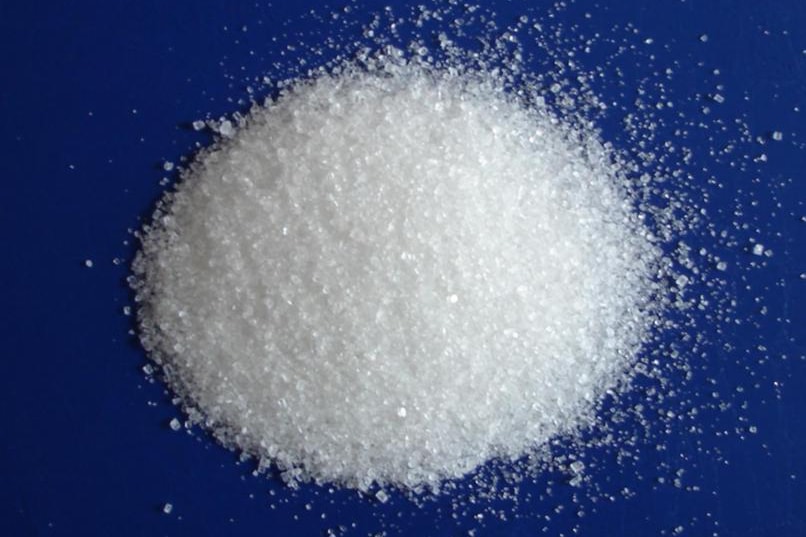
Ammonium sulfate is a chemical compound made from ammonia and sulfuric acid. This compound is available as a white powder or crystalline crystals and is known as a strong ammonium salt.
What is ammonium sulfate?
Ammonium sulfate is a chemical compound made from ammonia and sulfuric acid. This compound is available as a white powder or crystalline crystals and is known as a strong ammonium salt.
Ammonium sulfate is used in various industries such as agriculture, chemical, diving, and also as an additive in some foods such as bread and noodles.
Physical and chemical properties of ammonium sulfate:
Physical properties:
Appearance: Ammonium sulfate is available as white powder or crystalline crystals.
- Physical state: solid
- Melting temperature: the melting temperature of ammonium sulfate is about 235 degrees Celsius.
- Boiling temperature: at a temperature of about 280 degrees Celsius, ammonium sulfate begins to decompose.
- Solubility: ammonium sulfate is soluble in water. Its solubility in water increases with increasing temperature. This compound is not soluble in alcohol and ether.
chemical properties:
- chemical formula:
(NH4)2SO4
- Molecular weight: 132.14 g/mol
- Acidity: Ammonium sulfate is an ammonium salt that produces hydrogen sulfate ions and ammonium ions in water. For this reason, it is acidic.
- Stability: Ammonium sulfate is stable at normal temperature and in non-aqueous conditions. At higher temperatures, it breaks down and turns into ammonia and sulfur dioxide gases.
- Oxidizing/reducing property: ammonium sulfate does not have a strong oxidizing or reducing property.
These physical and chemical properties of ammonium sulfate determine its characteristics and applications in various industries.
Applications of ammonium sulfate:
As mentioned, this chemical substance is used in various industries; Below we describe some of them.
Agriculture industry:
Ammonium sulfate is used in the agricultural industry as a nitrogen fertilizer. Nitrogen is an important element for the growth and development of plants, because it plays a role in building proteins and amino acids vital for plants. Ammonium sulfate can facilitate the improvement of their growth and development by providing transferable nitrogen to plants.
In addition, ammonium sulfate has acidic properties that can be useful in correcting the pH of alkaline soils. By adding it to high pH soils, it lowers the pH and changes the soil to suitable conditions for plant growth.
Also, ammonium sulfate can stabilize nitrates in the soil, which can help reduce nitrogen evaporation and reduce environmental pollution.
In the agricultural industry, some specific plants require sulfur sources. Ammonium sulfate, as a source of sulfur, can meet the sulfur needs of plants and improve their growth.
It is important to note that the amount and time of using ammonium sulfate should be determined based on the needs of plants, soil analysis and the guidance of agricultural experts.
Chemical industry:
Ammonium sulfate is used in the chemical industry as a raw material and additive. Its uses include the production of soap, dyes and pigments, alkalis, chemical intermediates, and firefighting compounds. Ammonium sulfate plays an important role in improving the properties of materials and production processes and is of interest in the chemical industry.
Diving industry:
Ammonium sulfate is used in the diving industry as an active ingredient. The applications of this compound in this industry include precipitation of pollutants, protein stabilization, improvement of diving properties and pH control. Using ammonium sulfate, it is possible to clean the dip, precipitate and stabilize contaminants, stabilize proteins, and improve desirable properties such as consistency and tenderness. Also, it can be used to adjust the pH of the dive and improve its quality. Of course, in each case, the amount and time of using ammonium sulfate should be determined based on the specific needs and conditions of each process.
Food industry:
Ammonium sulfate is used in the food industry as a leavening agent in the production of bread and sweets, a pH regulator in dairy products, a soothing additive in chocolate and drinks, and a sourness regulator in the production of pickles. When using ammonium sulfate in the food industry, follow health standards and use licensed products and reliable sources.
Other uses:
Ammonium sulfate in the pharmaceutical industry, water treatment, firefighting production, chemical analysis and pretreatment
Production of ammonium sulfate:
Ammonium sulfate (sometimes abbreviated AS or AMS) has been produced for over 150 years. At first, this substance was produced using ammonia that was produced during the coal gas production process or ammonia that was produced from coal coke that was used to produce steel. Ammonium sulfate is produced through the reaction between sulfuric acid and heated ammonia. The size of the grains of this material is determined by controlling the production conditions of ammonium sulfate. In the production process, when the desired particle size is achieved, the granules of ammonium sulfate are granulated, dried and sieved for sizing.
Ammonium sulfate is generally produced by two different methods. A part of the production of ammonium sulfate is the result of processes in which the production of ammonium sulfate is not the main goal and this material is obtained as a side product. Among them, the production process of caprolactam and methyl methacrylate can be mentioned.
The second category includes the processes where the production of ammonium sulfate is the main goal and ammonium sulfate is considered as the main reaction product. Two main processes have been identified in reliable sources and references, the most important of which is the direct reaction of ammonia with sulfuric acid. The second process, the reaction of ammonium carbonate with sulfuric acid